How a League of Legends match works
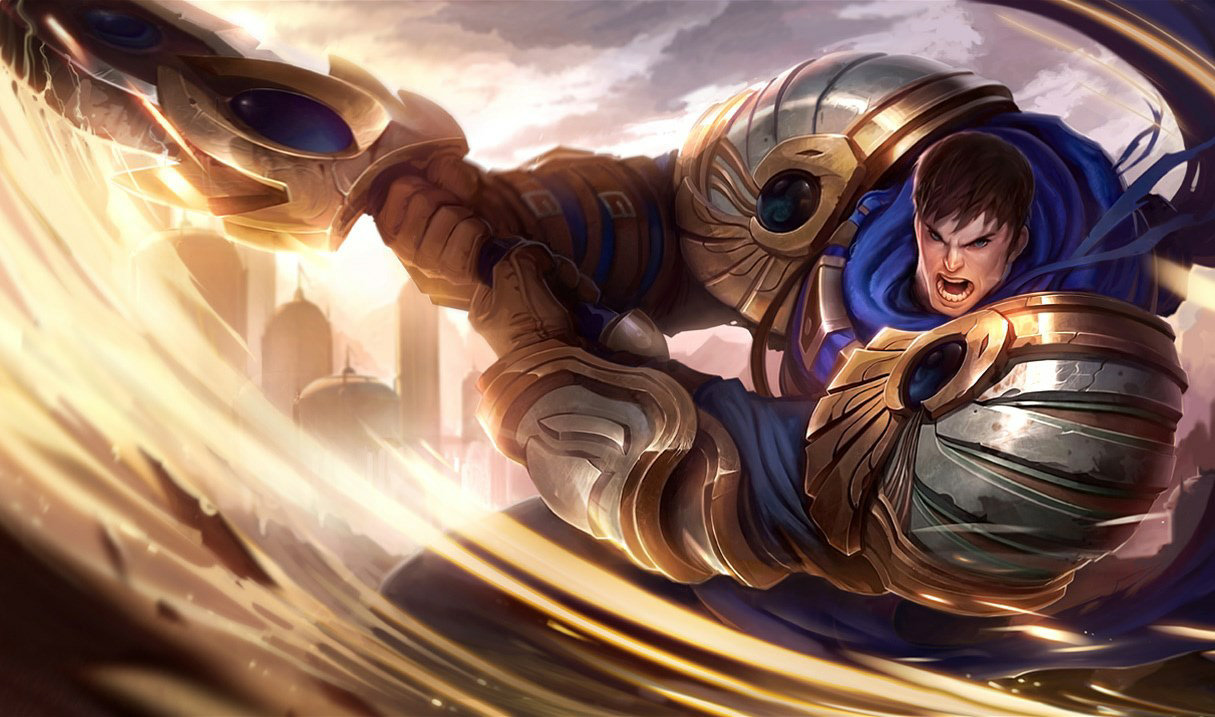
The beginner's guide: the goal, the Nexus, turrets and inhibitors, minions, the jungle, the big monsters, gold, experience and abilities, explained calmly for people who have never played.
The goal in one sentence
League of Legends is a team game: two teams of five players face each other on the same map, and each player controls a single champion for the whole match. The team that first destroys the enemy team's Nexus wins. It sounds simple, and it is, but almost everything that happens in a match exists to open a path to that Nexus or to protect your own.
That changes the way you think about the game from the very first minute. Defeating enemy champions helps a lot, because it gives rewards and takes the opponent out of the match for a while, but a team with fewer kills can still win if it makes better use of chances to take down structures. Beginners tend to chase fights all the time; with practice, the question becomes a different one: what does this play do to get my team to the Nexus?
The base, the Nexus and the fountain
Each team starts in its base, in one corner of the map. In the middle of the base stands the Nexus, the big structure you must protect. Your team's minions come out of it for the entire match.
Behind the Nexus is the fountain, where your champion appears at the start and appears again after being defeated. At the fountain the champion recovers health and mana and can use the shop to buy items. Going back to base is an important decision: you recover everything and spend the gold you saved, but you stay away from the action for a while.
Lanes, turrets and inhibitors
From one team's Nexus to the other there are three main paths, the lanes. According to Riot's official page, each lane is defended by three turrets and one inhibitor, and the Nexus itself is protected by two more turrets. To reach the enemy Nexus, a team has to destroy every defense in at least one lane.
Turrets attack enemy minions and champions that come close and also give vision of the area around them. That is why the safe way to attack a turret is to let your minions go in first: while the turret shoots at them, your champion deals damage without being the target. Walking alone into an enemy turret's range, especially early in the match, is one of the most common beginner mistakes.
The inhibitor stands at the end of each lane, close to the base. It is part of the defenses that block the way to the Nexus. Taking down inhibitors is a big step toward victory, because it opens up the enemy base and increases the pressure on them.
Minions
Minions are small units controlled by the game. They spawn at each team's Nexus and march down the three lanes, fighting the enemy minions they meet along the way. They may look unimportant, but they are the foundation of the game: they help attack structures, they shield you from turrets and they are the main source of gold and experience for anyone in a lane.
Landing the last hit on an enemy minion is what earns you its gold. Practicing last hits without neglecting your own safety is one of the habits that makes the biggest difference for beginners.
The jungle, fog of war and the big monsters
Between the lanes lies the jungle, an area full of paths, neutral monsters and plants. Jungle monsters belong to no team and reward whoever defeats them. The map also has fog of war: you only see what your allies, structures and minions can see. That is why vision matters so much, since an enemy hiding in the jungle can surprise anyone who pushes too far.
Two kinds of big monsters deserve special attention. Baron Nashor is the most powerful monster on the map. The team that defeats it gets a temporary boost of attack damage and ability power, an empowered recall and an aura that makes nearby minions stronger, which helps a lot in taking down structures.
Dragons are the other contested objective. The official page lists five elemental dragons, Infernal, Cloud, Mountain, Ocean and Hextech, plus the Elder Dragon. Each one gives the team a different bonus and changes the map's terrain according to its element. Since the details of these bonuses change with updates, it is always worth checking the official patch notes.
Gold, experience and levels
During the match, your champion earns experience and gold. Experience makes the champion level up, which raises their stats and unlocks points to improve abilities. Gold is used to buy items in the shop. Both come from the same actions: defeating minions, monsters and champions, helping an ally defeat them and destroying structures.
Items make the champion stronger in different ways: more damage, more durability, more speed, special effects. According to the official page, a champion can carry up to seven items at a time. Choosing well what to buy, thinking about your champion and your opponents, is an important part of the game. On SequeLariLOL you can explore every item with price and recipe and try combinations in the Build maker.
Abilities and summoner spells
Each champion has five abilities: a passive, which works on its own, three basic abilities and an ultimate, the strongest, which usually has the longest cooldown. On the default keyboard layout, abilities are on the Q, W, E and R keys.
In addition, before the match each player picks two summoner spells, on the D and F keys. Among the most used are Flash, which makes the champion jump a short distance, Teleport, Smite, widely used by junglers, and Ignite. On the Summoner spells page you can see what each one does and its cooldown, straight from official data.
First steps
To start well, play the tutorial and the matches against the game's AI, which exist precisely for people who are learning. Pick a few champions and play many matches with them instead of switching all the time: understanding one champion's abilities well teaches a lot about the whole game.
Keep an eye on the minimap, walk with your minions, respect enemy turret range and remember that the goal is the Nexus. Above all, play with respect: League of Legends is a team game, and a match is much better when everyone helps each other. This guide is written by fans; for the complete and always up-to-date rules, Riot's official page is the reference.